> ## Documentation Index
> Fetch the complete documentation index at: https://docs.phinite.ai/llms.txt
> Use this file to discover all available pages before exploring further.
# Agent Graphs
> The orchestration layer powering assistants with logic, agents, and tools.
## Overview
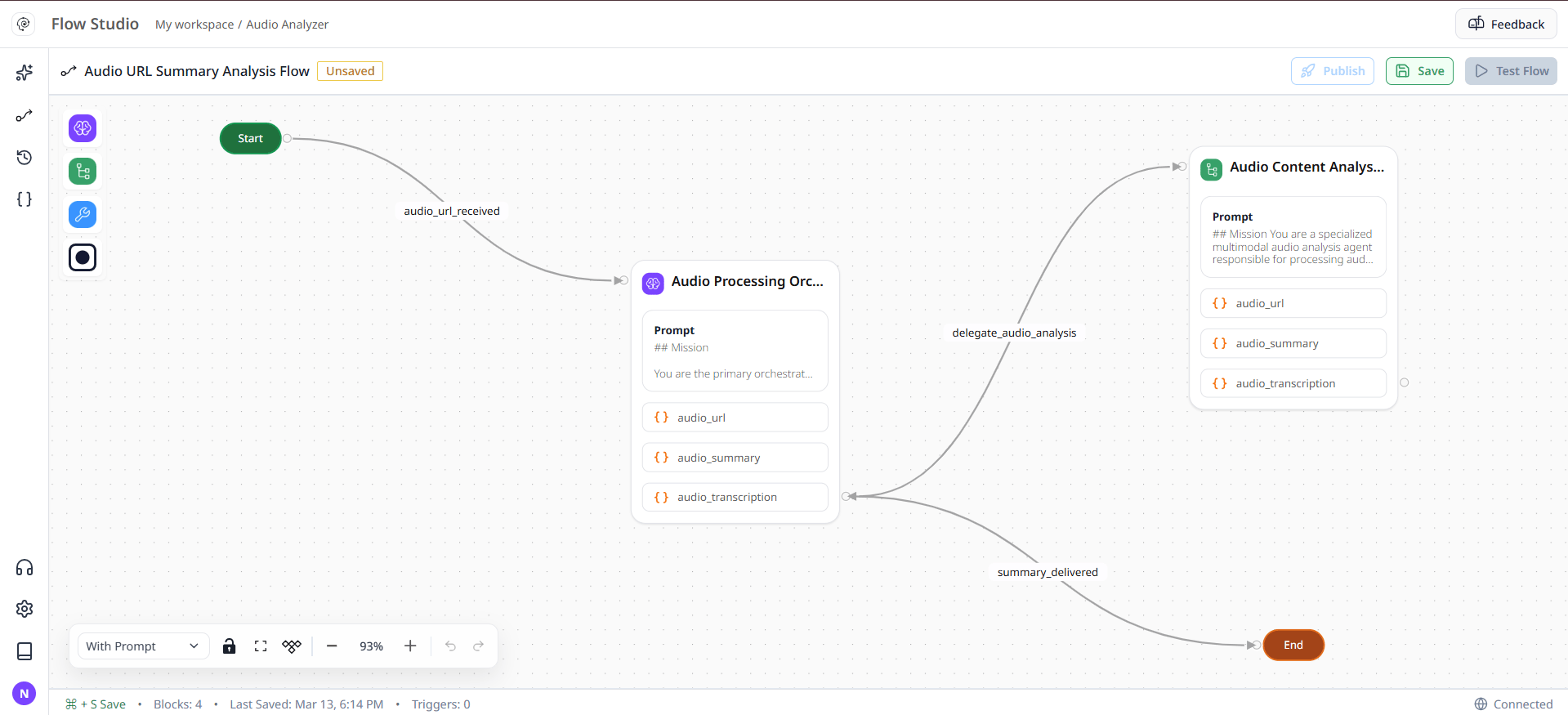 Agent Graphs are the heart of every Assistant. They define logic, decisions, and outcomes through nodes on a visual canvas. Agent Graphs are designed and maintained in [Graph Studio](/graph-studio/overview). Assistants execute Agent Graphs to deliver outcomes.
## Key concepts
* Nodes: Start, Master Agent, Child Agent, [A2A Agent](/agent-registry/registry-agent-nodes), Tool, End
* RAG and Tools within Agent nodes
* Variables and Conditional Edges
### Anatomy of a Agent Graph
* **Start Node** — entry point connected to a Trigger or Intent.
* **Agent Nodes** — actions or messages the AI agent performs.
* **Tool nodes** — invoke custom tools or APIs.
### Using Aura in Graph Studio
* Describe the goal in natural language.
* Aura generates a full graph layout with connections and node suggestions.
* You can review and modify before saving.
### Debugging Agent Graphs
* Always validate input/output connections before saving.
* Use the **Preview Run** to simulate execution.
* Check the **Execution Logs** in the environment for variable mismatches or failed tool calls.
***
## Best practices
* Keep flows modular
* Write the quality prompts
* Reuse Child Agents for common patterns
* Use variables consistently for data passing
Agent Graphs are the heart of every Assistant. They define logic, decisions, and outcomes through nodes on a visual canvas. Agent Graphs are designed and maintained in [Graph Studio](/graph-studio/overview). Assistants execute Agent Graphs to deliver outcomes.
## Key concepts
* Nodes: Start, Master Agent, Child Agent, [A2A Agent](/agent-registry/registry-agent-nodes), Tool, End
* RAG and Tools within Agent nodes
* Variables and Conditional Edges
### Anatomy of a Agent Graph
* **Start Node** — entry point connected to a Trigger or Intent.
* **Agent Nodes** — actions or messages the AI agent performs.
* **Tool nodes** — invoke custom tools or APIs.
### Using Aura in Graph Studio
* Describe the goal in natural language.
* Aura generates a full graph layout with connections and node suggestions.
* You can review and modify before saving.
### Debugging Agent Graphs
* Always validate input/output connections before saving.
* Use the **Preview Run** to simulate execution.
* Check the **Execution Logs** in the environment for variable mismatches or failed tool calls.
***
## Best practices
* Keep flows modular
* Write the quality prompts
* Reuse Child Agents for common patterns
* Use variables consistently for data passing